 Culture day
Culture and Kata Tjuta
Kuniya walk and Walpa Gorge
- Duration
- 6 hrs
- Rating
- 5.0
- Price
- from $109
Guides
Language
EnglishCurrency
US dollar · $Your currency applies on GetYourGuide too.
Guide · Anangu culture
Parks Australia suggests you start here, and after a sunrise it is the right place to understand what you just saw: a building shaped by a creation story, a tunnel of Anangu law, and art made in the community.
Editorial team, ulurusunrise.comUpdated October 22, 2026about 6 min to read37 sources
Parks Australia's advice is to begin your trip at the Cultural Centre, to support the local community and to understand the park better. Inside are exhibits and presentations with Anangu and park rangers, a visitor information desk, Aboriginal art galleries and community-owned shops, and the park suggests you allow at least two hours.2 It is open from 7.00 am to 5.45 pm every day.1
The building sits on the main road to Uluru, 10 to 15 minutes' drive from the park entry station, so it fits easily into the morning after a sunrise at Talinguru Nyakunytjaku.3 The coach tour this site books ends back in Yulara after Walpa Gorge, so if you join it, come to the Cultural Centre on another day or in the afternoon by car.
The centre lies inside the national park, past the entry station, so you need a park pass to drive there.63 Your pass money supports the people whose culture the centre presents: a quarter of park pass revenue goes to Anangu homelands, training and business development.7
The park's recent history
The Cultural Centre is a free-form building of locally made mud bricks, opened in 1995 to mark ten years since the park was handed back to its Aboriginal Traditional Owners.10 Its shape represents the ancestral beings Kuniya, the woma python woman, and Liru, the venomous snake man.10
You do not need to know the story to feel the building: low curves, earth walls and shade that feel right after a morning in the open desert. Take the time to look at the shapes before you go in, then again on the way out, once the Tunnel has told you some of what they stand for. Many of the details are made to be noticed slowly, and a quiet, unhurried pace suits the place better than a quick lap between the shops.
Behind the centre, a picnic area with tables, gas barbecues and shelter looks straight at Uluru.12 Ininti, inside, is the only place in the whole park where you can buy food and drinks, so this is also where your second breakfast happens.13
Your park pass
Inside the centre
| Part | What it is | Good to know |
|---|---|---|
| Tjukurpa Tunnel | Anangu law and creation stories | Self-guided, no photos |
| Maruku Arts | Gallery of art and carved wood | Open 9 am to 5 pm |
| Walkatjara Art | Mutitjulu community art centre | Artists get 50% of the price |
| Ininti | Café and souvenirs | The only food in the park |
| Picnic area | Tables, barbecues and shelter | Faces Uluru |
From Parks Australia's pages on the Cultural Centre; gallery hours can change.415161312
Culture with a guide
Culture dayKuniya walk and Walpa Gorge
 Long day
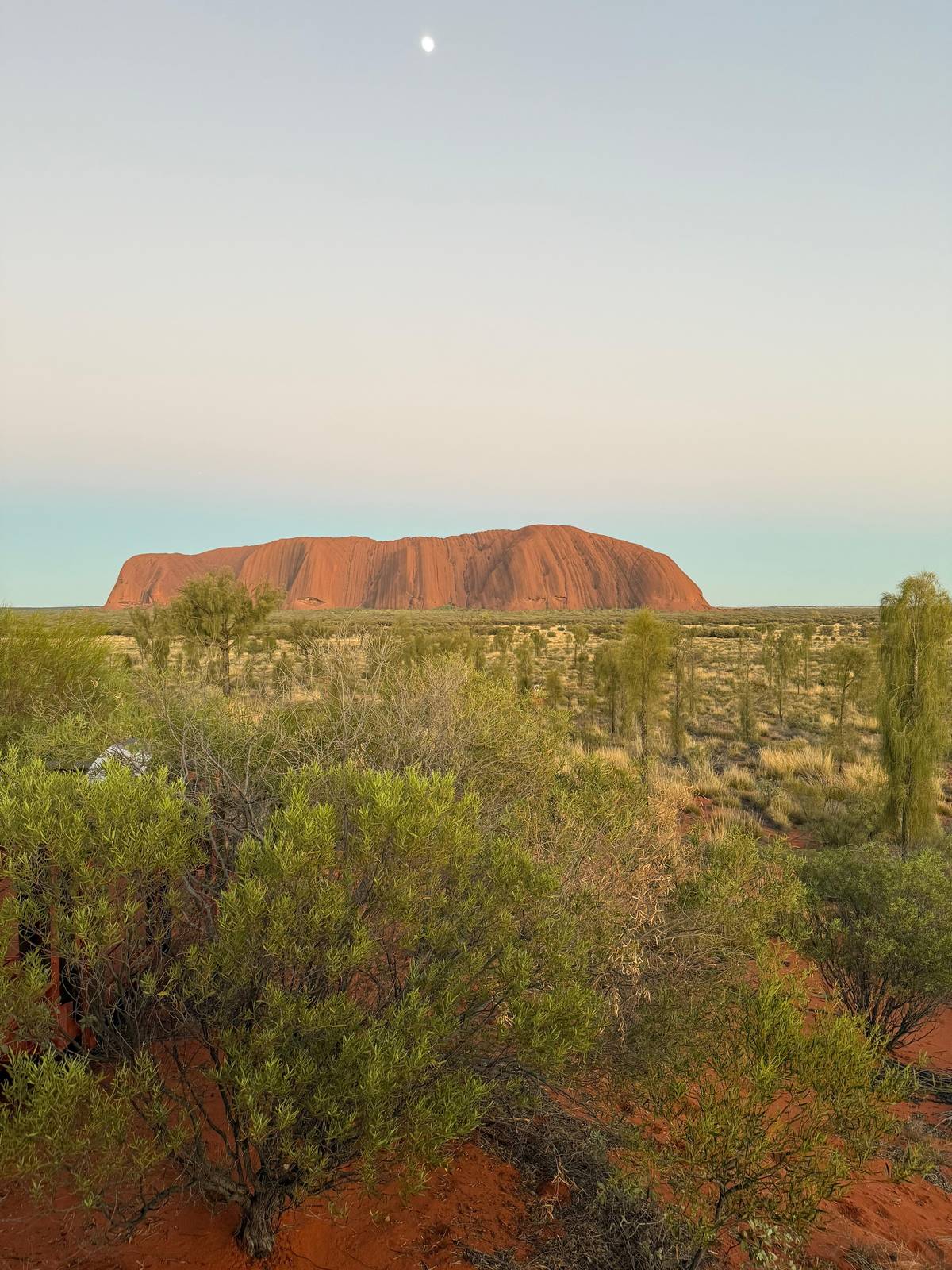 With the dawn
Tjukurpa is not written down. It is memorised and passed on to the right people like an inheritance.
Parks Australia suggests making the Tjukurpa Tunnel your very first experience of the park. It is self-guided, you should walk it quietly and take your time, and for cultural reasons no photography is allowed inside.4 It introduces Tjukurpa and many of the important creation stories of Uluru, with Anangu art and explanations of law and appropriate behaviour.
Tjukurpa, pronounced chook-orr-pa, is the foundation of Anangu culture: the religious philosophy that links Anangu to the environment and their ancestors.20 It is not written down; it is memorized and passed on to the right people like an inheritance.19 Its stories also work like maps, telling where important places are and where and when water and food can be found.21
Parks Australia asks visitors not to replicate or retell Tjukurpa stories.22 You will read some of them along the walks, for example the Kuniya and Liru story beside the track to the waterhole, and you will hear others from rangers and Anangu guides.23
Checklist
Cost calculator
Starting totals by group size.
Total from$218
per traveler from $109
Check availabilityfree cancellationGroup totals for dawn: the smallest per-person GetYourGuide fare for each tour, multiplied by the number of travelers and converted with the day's euro rate; the booking page shows the exact sum.
Video
The player loads on your tap, not before.
The park has two galleries of Anangu art and craft, Maruku Arts and Walkatjara Art, both at the Cultural Centre, both Aboriginal owned and operated, with profits invested back into the local community.5 Both are open every day from 9 am to 5 pm, though their hours can change.15
Maruku Arts sources work from more than 500 artists in remote Aboriginal communities and homelands across the Central and Western Desert, including Mutitjulu.24 A not-for-profit organization incorporated in 1984, it also runs Anangu-led cultural experiences in the park, as daily workshops or private bookings.25
Walkatjara Art is the Mutitjulu community's own art centre, where artists receive 50% of each painting's sale price.16 If you want a souvenir from Uluru that puts money in the hands of the artist, this is where to buy it.
The Traditional Owners of the park are Yankunytjatjara and Pitjantjatjara people, who call themselves Anangu, pronounced arn-ung-oo, and ask visitors to use that word too.26 Very few Anangu speak English as their first language; most speak Pitjantjatjara and Yankunytjatjara, dialects of the Western Desert language.27
If you wonder about the meaning of Uluru, the answer is simple: Uluru is a proper noun from the Pitjantjatjara language and has no English translation.28 The explorer William Gosse named it Ayers Rock in 1873; since 2002 the official name has been Uluru / Ayers Rock, with the original name first.29 The lines under some letters, in spellings such as Uluṟu, mark retroflex consonants, said with the tongue curled slightly back.30
A few customs help. Anangu greet each other with palya, a word that also means welcome, thank you, understood, ok and goodbye.31 Always ask before photographing Anangu, and never enter or photograph restricted areas such as sacred sites, ceremonial sites or homes.32
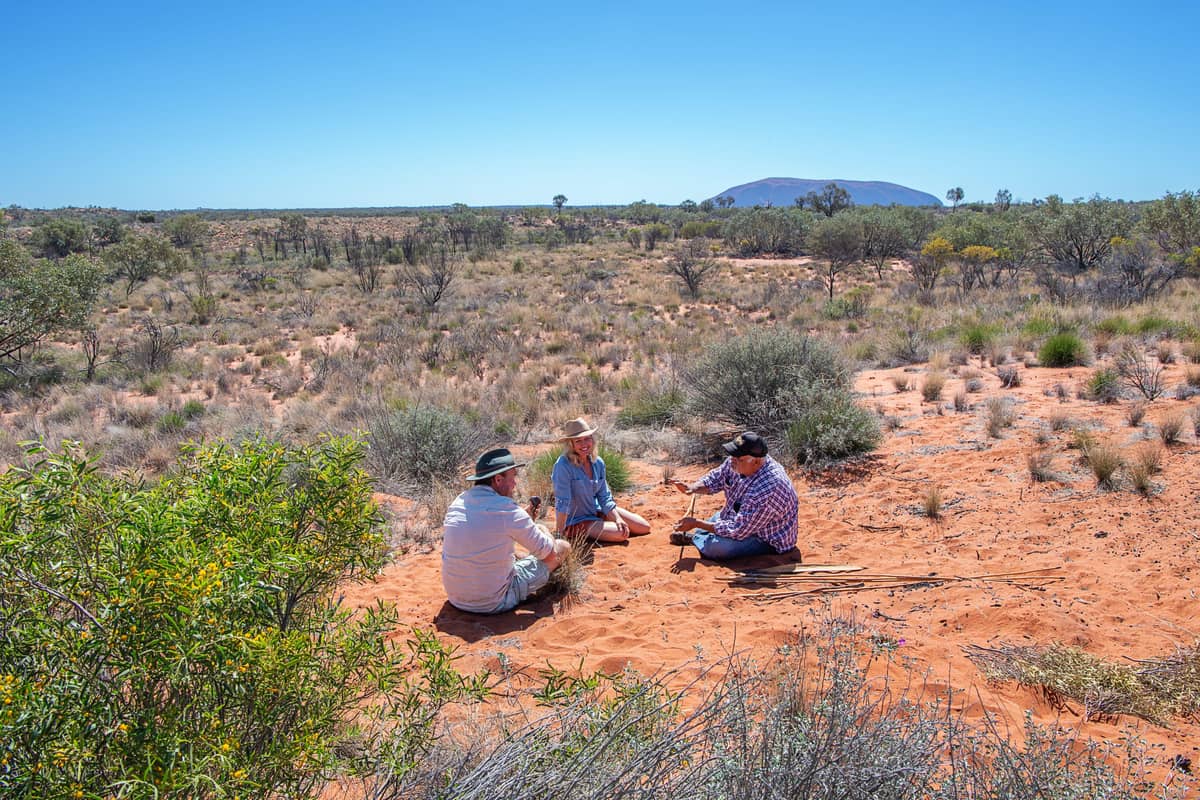
Parks Australia lists cultural activities that teach bush tucker, rock art and Tjukurpa stories from the people who have lived here for thousands of years, including a dot painting workshop.18 The free ranger-guided Mala walk adds rock art, traditional tools and Tjukurpa along the base of the rock, at 8.00 am from October to April and 10.00 am from May to September.3317
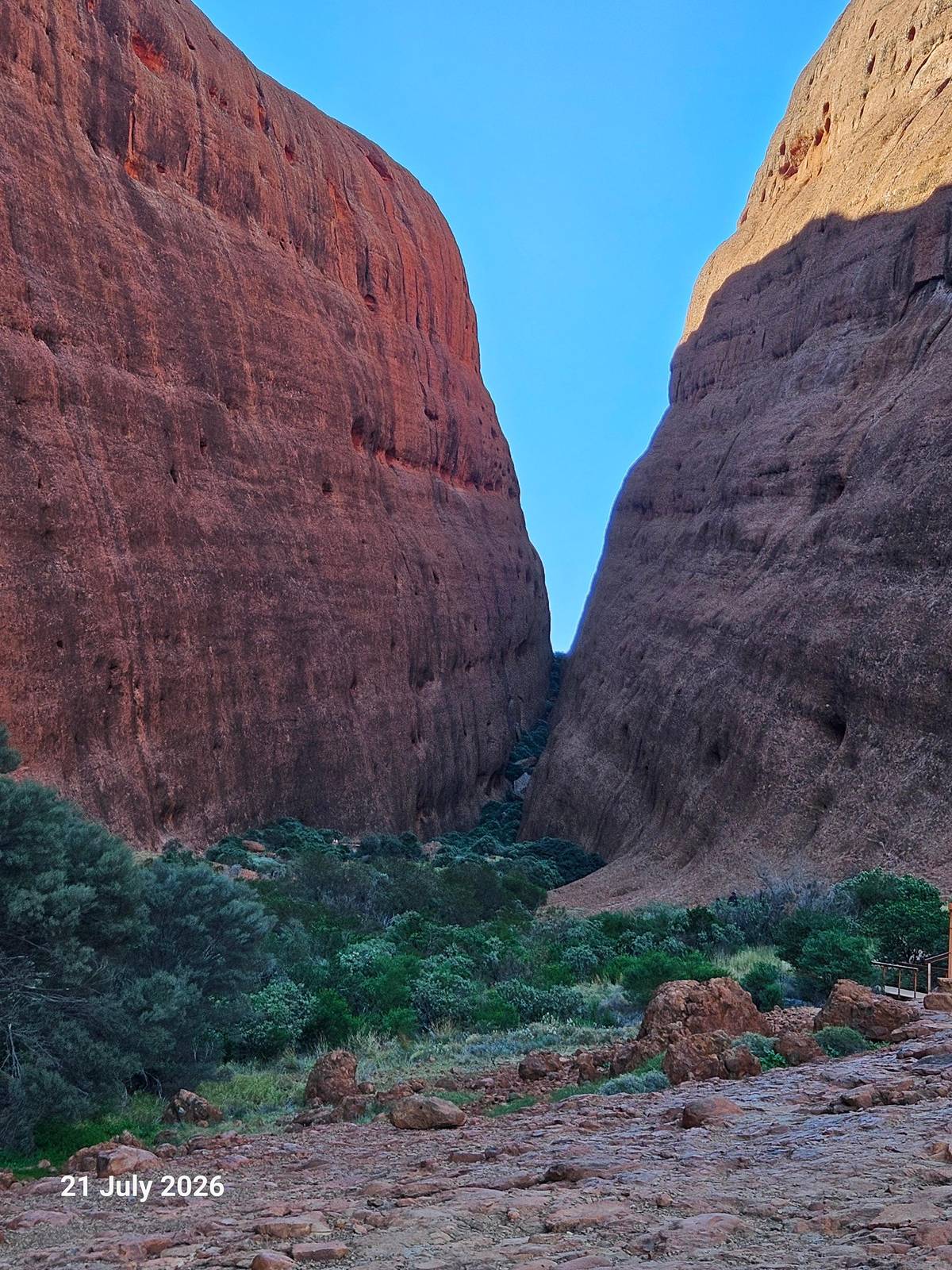
On GetYourGuide, one tour combines Uluru culture with the Kata Tjuta trails over 6 hours, including the Walpa Gorge walk of about 1 hour and the 1 km Kuniya walk at the rock; its price does not include the park pass. It is rated 5.0 from 9 reviews and starts from $109.
A longer Aboriginal and cultural experience runs 7 hours in a small group of up to 9, from $280. Before booking any of these, read what the listing says about who guides: one private sunrise tour states that Anangu guides may not always be available.
The centre tells a story that is also the park's history. Aboriginal people have inhabited Central Australia for more than 30,000 years, according to archaeological evidence.34 On 26 October 1985 the Governor-General returned the title deeds of the park to Anangu at Mutitjulu, and Anangu leased the land back for 99 years.8
Since then Anangu and Parks Australia have run the park together. Anangu own Uluru and Kata Tjuta and lease them to the Australian Government, and a board of 12 makes the major decisions, eight of them Aboriginal members nominated by the Traditional Owners.3536 The park was added to the World Heritage List in 1987 for its nature and in 1994 as a living cultural landscape.9
Mutitjulu, the community named after the waterhole, is home to Anangu who live inside the park; it is closed to visitors without a permit or permission.37 The Cultural Centre is where that community meets you, on its own terms.
Pick your dawn
Pickup in Yulara, tea or coffee at sunrise and a walk in Walpa Gorge; cancel free up to a day before.
7.00 am to 5.45 pm. Every day.1
At least two hours. Parks Australia's recommendation.2
No. Photography is not allowed there, for cultural reasons.4
It has no translation. It is a proper noun from the Pitjantjatjara language.28
Only at Ininti. The café at the Cultural Centre.13
The community and the artists. At Walkatjara, artists receive 50% of the price.16
Palya. It also means thank you and goodbye.31
Sources
Keep reading