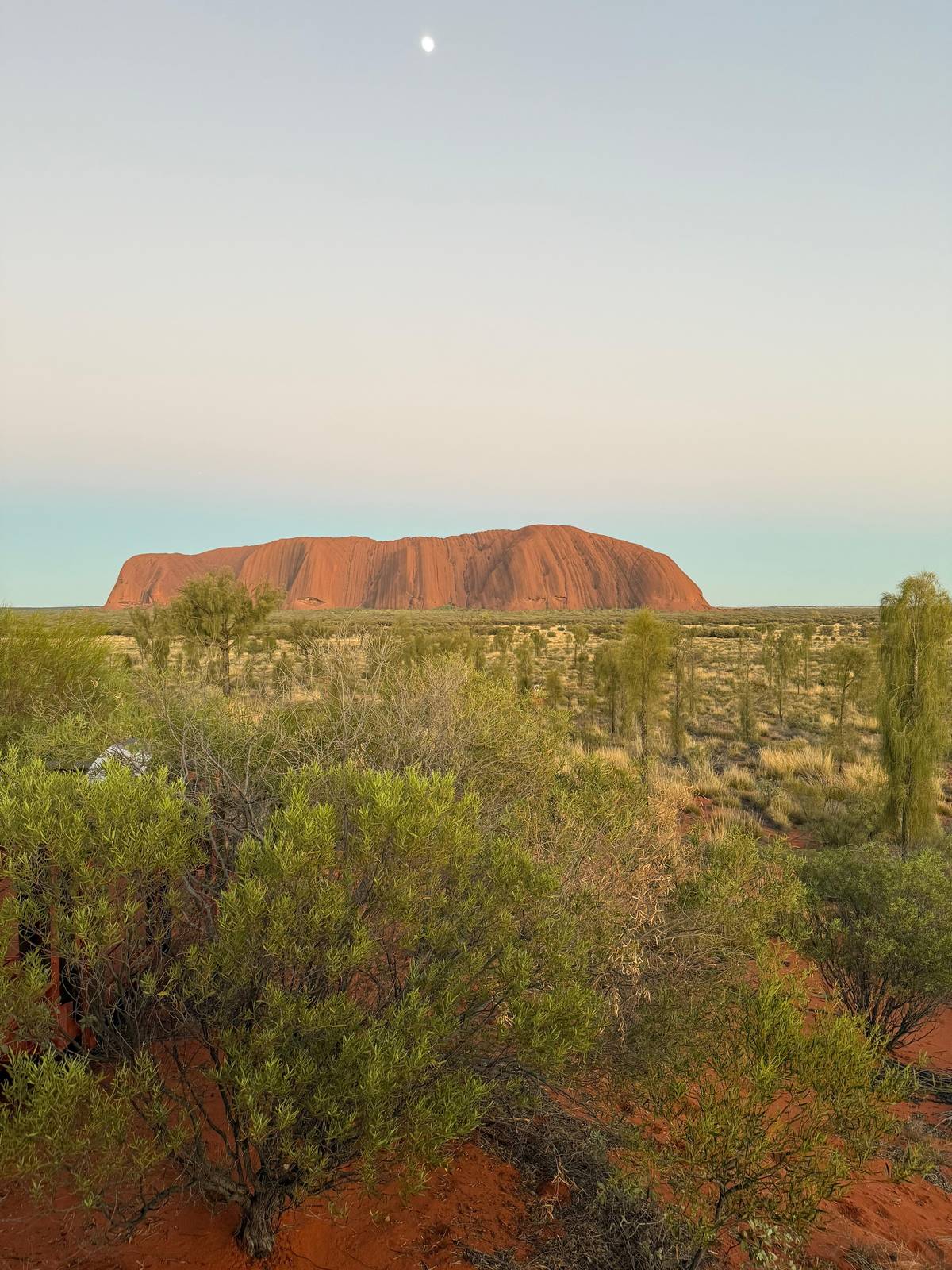
 Best for walking
Guides
Language
EnglishCurrency
US dollar · $Your currency applies on GetYourGuide too.
Guide · Best time
The best time to visit Uluru, month by month
From May to September the days are mild and the dawns are cold; from October to March the mornings are warm and the afternoons dangerous. Here is how each month feels at sunrise and at noon.
Check availabilityfrom $147 · free cancellation
Editorial team, ulurusunrise.comUpdated October 22, 2026about 6 min to read22 sources
The short answer: May to September
Parks Australia names the period from May to September as the best time to come, when the daytime maximum is usually between 20 °C and 30 °C, walking is safer and much more pleasant, and there is very little rain.1 The same page warns that overnight temperatures can be very cold in winter, so bring warm clothing.1 For a sunrise trip, that second point matters as much as the first.
The record of the Yulara weather station, near Ayers Rock airport, shows the pattern clearly. Average highs are 24.2 °C in May, 20.2 °C in June, 20.9 °C in July, 23.8 °C in August and 29.1 °C in September.2 Those are the months when you can walk the 10.6 km base walk or the Valley of the Winds without racing the heat.5
Rain is rare in these months too: August averages just 5 mm and September 8 mm.2 On a clear winter morning you will see the whole sequence, from the dark outline of the rock to full colour, without a cloud in the way.
The Anangu calendar
Five seasons in the park
-
January to March
Itjanu
Clouds bring rain; plants flower.6
-
April to May
Wanitjunkupai
The cold begins; reptiles rest.7
-
Late May to July
Wari
Frost and dew, little rain.8
-
August to October
Piriyakutu
Warm wind; animals breed.9
-
Late October to December
Mai wiyaringkupai
The hottest season, dry lightning.10
What the winter dawn feels like
A sunrise in June or July is a cold business. The Yulara station averages a low of 5.5 °C in June and 4.5 °C in July, and Parks Australia notes that winter nights can drop as low as minus 7 °C.211 Its packing list includes warm layers for cold nights and early sunrises, and a beanie and gloves in winter.12
The park also opens later in winter: at 6.30 am in June and July, compared with 5.00 am from October to February.13 Days are shorter as well, with the sun above the horizon for 10.6 hours in mid-June against 13.7 hours in mid-December.2 A later dawn means a gentler alarm, and the booked tour's listing asks you to bring a jumper, as it can be cool in the winter months.
Anangu describe this time as Wari, usually late May to July: the cold time, with frost and dew on some mornings and very little or no rain.8 Frost on the grass of the dunes is one of the quiet sights of these weeks.
Month by month
Daylight and rain days across the year
Hours without sunDays with precipitationSeason
Climate
Heat, cold, rain and daylight at Yulara
| Month | Daylight (h) | Darkness (h) | High / low | Wet days | Walking weather |
|---|---|---|---|---|---|
| Jan | 13.5 | 10.5 | 38 / 23 °C | 2 | Hot |
| Feb | 13 | 11 | 37 / 22 °C | 2 | Hot |
| Mar | 12.3 | 11.7 | 35 / 19 °C | 2 | Hot |
| Apr | 11.5 | 12.5 | 30 / 15 °C | 1 | Warm |
| May | 10.9 | 13.1 | 24 / 9 °C | 1 | Best walking |
| Jun | 10.6 | 13.4 | 20 / 6 °C | 1 | Best walking |
| Jul | 10.7 | 13.3 | 21 / 5 °C | 1 | Best walking |
| Aug | 11.2 | 12.8 | 24 / 6 °C | 1 | Best walking |
| Sep | 11.9 | 12.1 | 29 / 11 °C | 1 | Best walking |
| Oct | 12.6 | 11.4 | 33 / 15 °C | 2 | Warm |
| Nov | 13.3 | 10.7 | 35 / 19 °C | 3 | Hot |
| Dec | 13.7 | 10.3 | 36 / 21 °C | 4 | Hot |
Climate averages we calculated from NOAA's Yulara Aero records, 1991 to 2020: mid-month daylight, the typical day high and night low, and the count of days wetter than 2.5 mm.2 Season according to Parks Australia.1
Three kinds of trip
Pick your season
Best for walking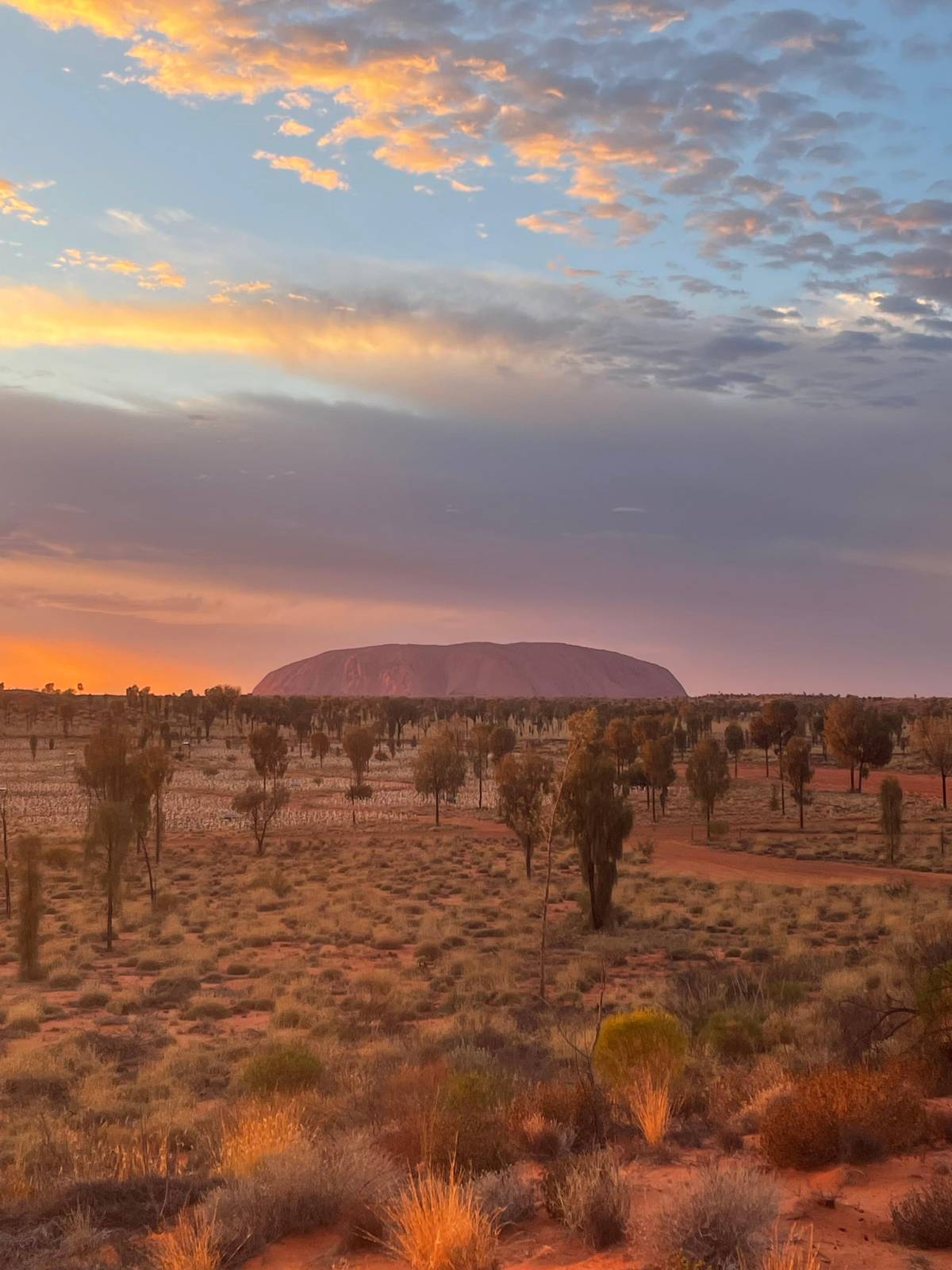 Wildflowers
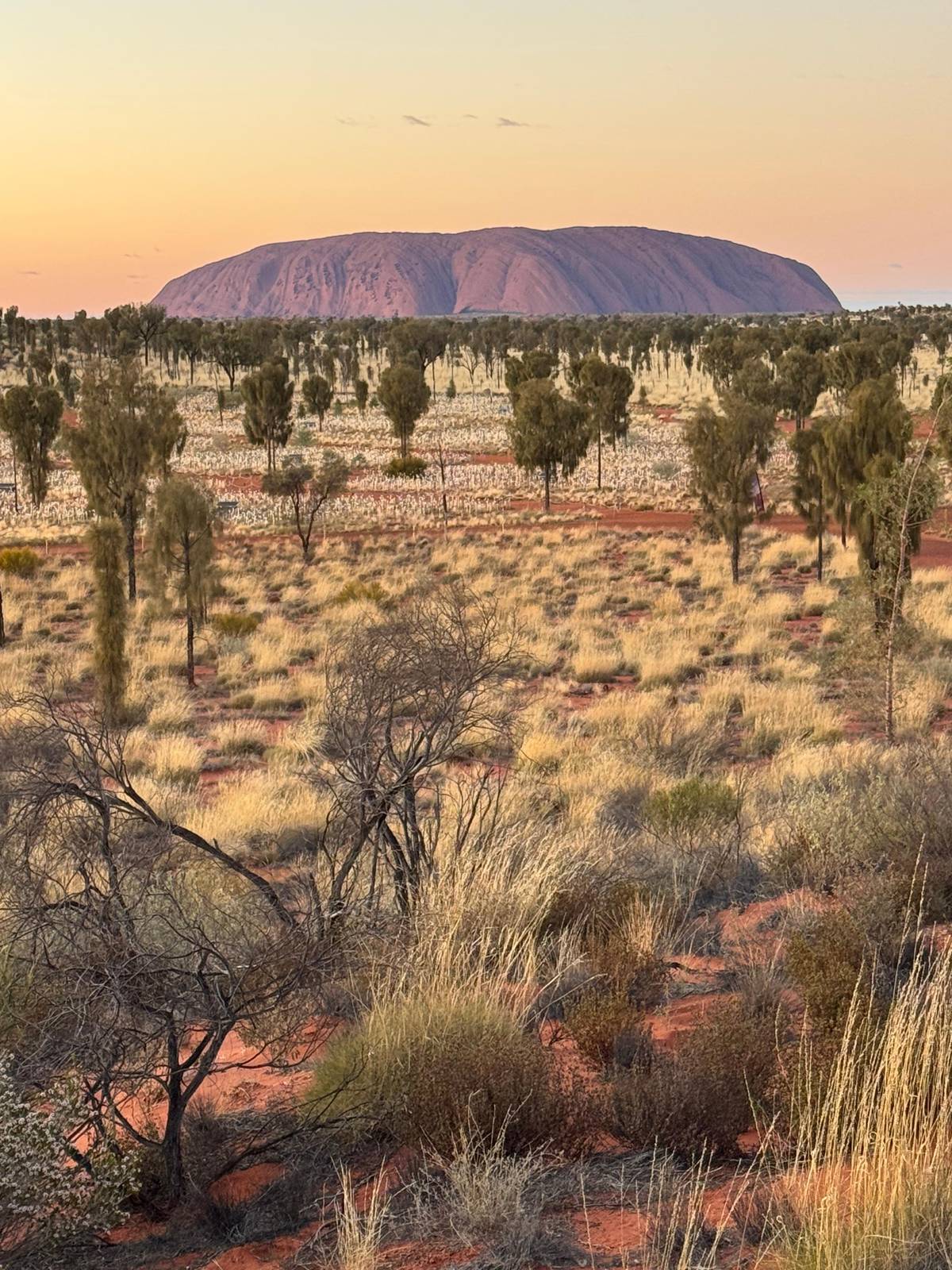 Early starts
Decision helper
When should you go?
Match the month to your plans
The best time to come is between May and September, when the maximum temperature during the day is usually between 20°C and 30°C.
Wildflowers in August and September
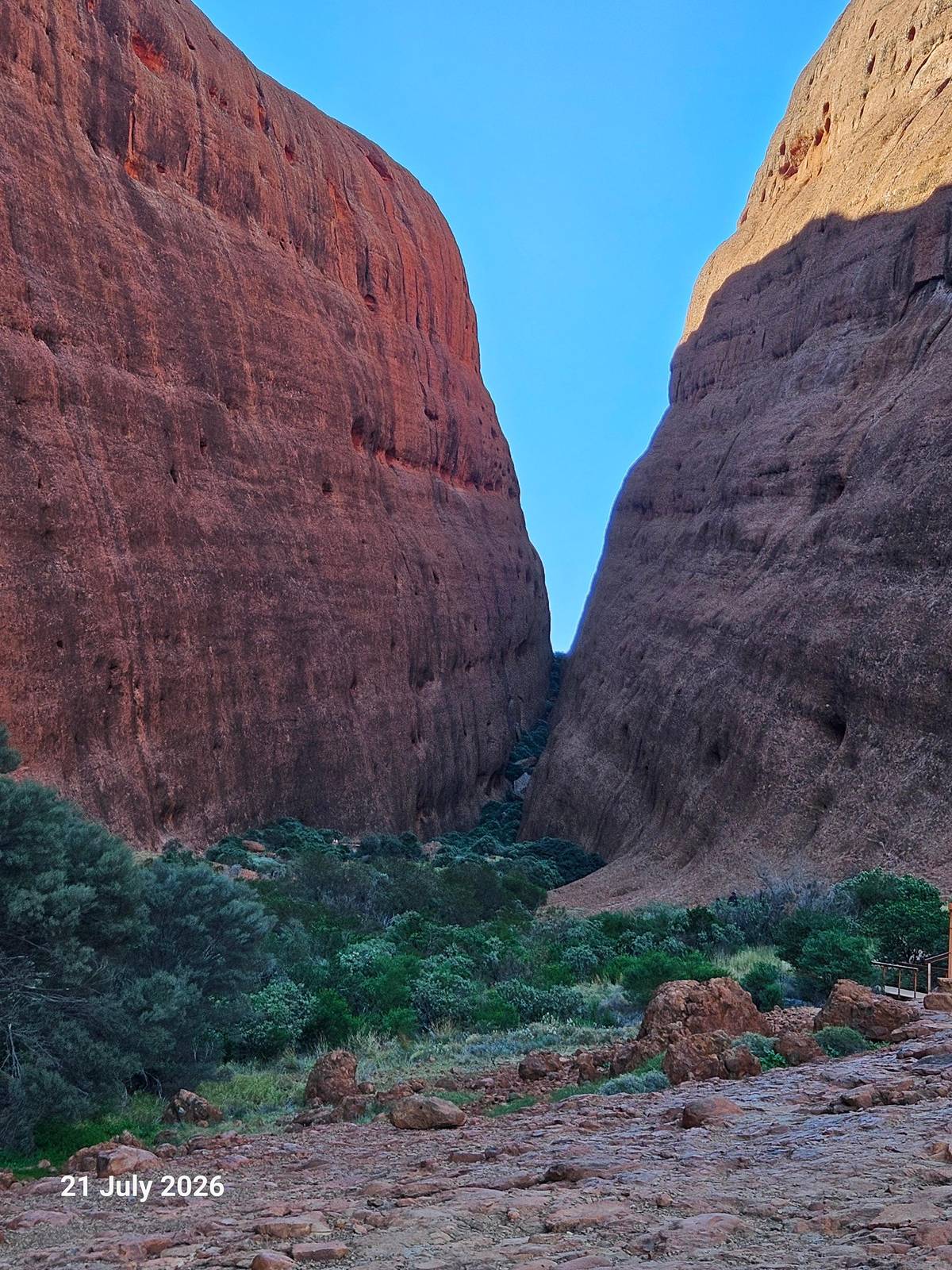
August and September are usually the best months to see the park's wildflowers in bloom.3 Anangu call the season from August to October Piriyakutu, when a warm, steady wind comes from the north and west, animals breed and food plants flower.9 At Walpa Gorge, the entrance is decorated with pink daisies in late winter.16
This is a sweet spot of the year: highs of 23.8 °C in August and 29.1 °C in September, lows of 6 °C and 10.9 °C, and almost no rain.2 Dawns are still cold, but no longer freezing, and the walks are pleasant until late morning.
Photographers get both the flowers and clean light, and a frame with blooms in the foreground and the rock behind them is a classic picture of the season. How many flowers appear depends on the rain that fell before, so treat a good display as a bonus rather than a promise.
Checklist
Pack for the season
01
May to September
- Warm layers, beanie and gloves for dawn
- Sun hat for the day
- Lip balm for dry air
02
October to March
- Walks finished before 11 am15
- One litre of water per hour of walking
- A fly head net
Video
Uluru must-know: best time, tips and experiences
The player loads on your tap, not before.
The hot months, October to March
From October to March the park can get extremely hot, with daytime temperatures regularly above 35 °C.17 The Yulara record gives average highs of 32.5 °C in October, 35 °C in November, 36.4 °C in December, 38.4 °C in January and 37.1 °C in February.2 Parks Australia mentions summer days as hot as 47 °C.11
That changes how you use a day. Parks Australia advises not walking after 11.00 am in summer and avoiding 2.30 pm to 6.30 pm, and some tracks close: the north-east face and the Valley of the Winds from 11 am on the hottest days.151819 A sunrise tour puts you outside in the coolest hours of a summer day.
Summer also brings large numbers of flies; a head net, sold on arrival, helps.20 Anangu call late October to December Mai wiyaringkupai, the hottest season, when storm clouds bring lightning but little rain.10
Rain, storms and waterfalls
The park gets around 300 mm of rain a year, but rarely on a schedule.11 Heavy rain is most likely from November to March, and lightning storms are most common from October to February.4 At the Yulara station, December is the wettest month on average, with 48 mm and 4 days of at least 2.5 mm.2
Rain is a gift if you are there for it. The hot season's storms fill the waterholes and start Uluru's waterfalls flowing, and the easiest places to see them close up are the waterhole on the Kuniya side and Kantju Gorge on the Mala walk.1714 On a wet morning the rock looks different again, moody under cloud and shiny when it is wet.21
Itjanu, usually January to March in the Anangu calendar, is when overcast clouds usually bring rain and food plants flower.6 A cloudy dawn can hide the sunrise entirely, so if your dates fall in the wet months, keep a spare morning.
Timing a sunrise in each season
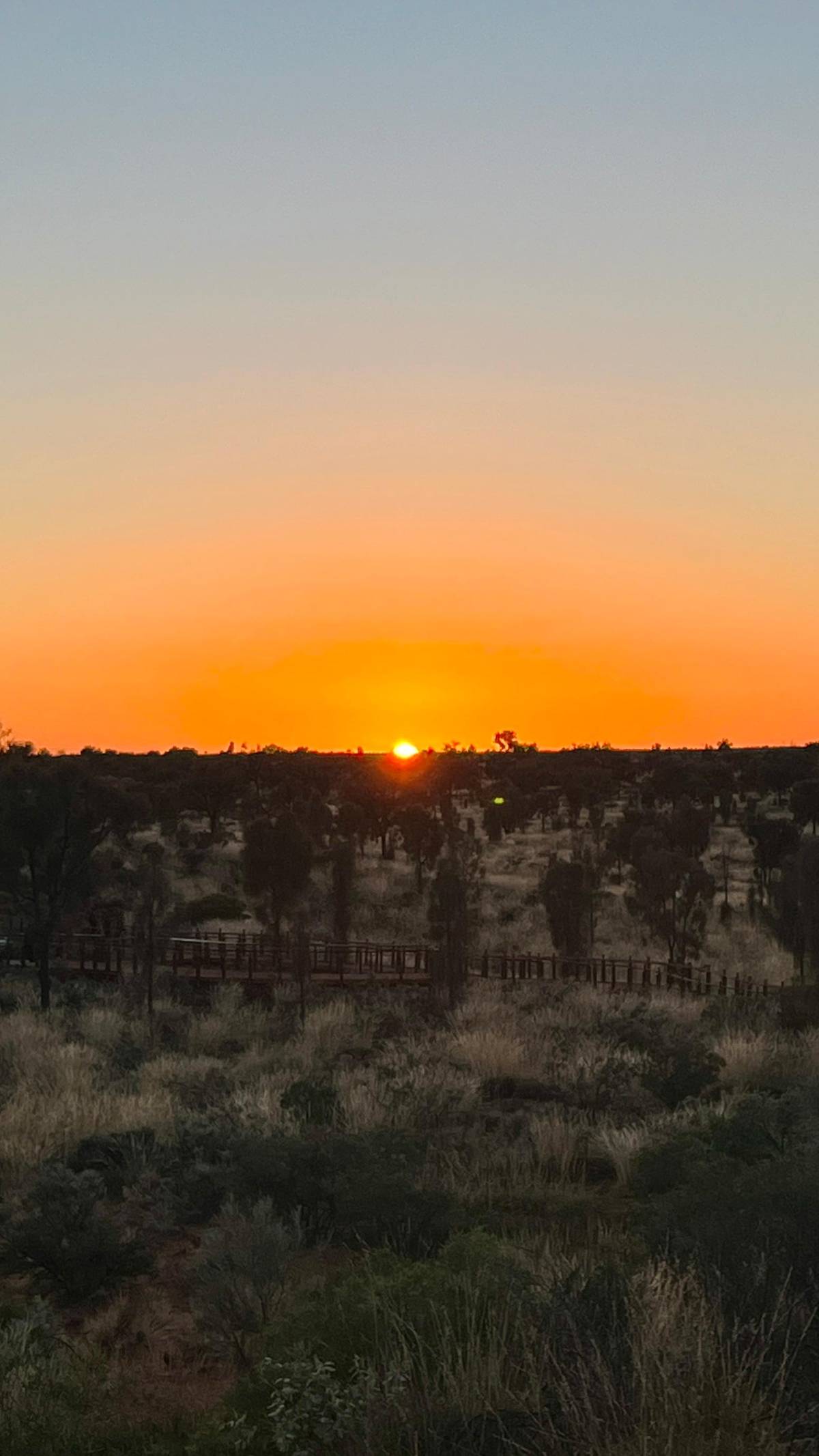
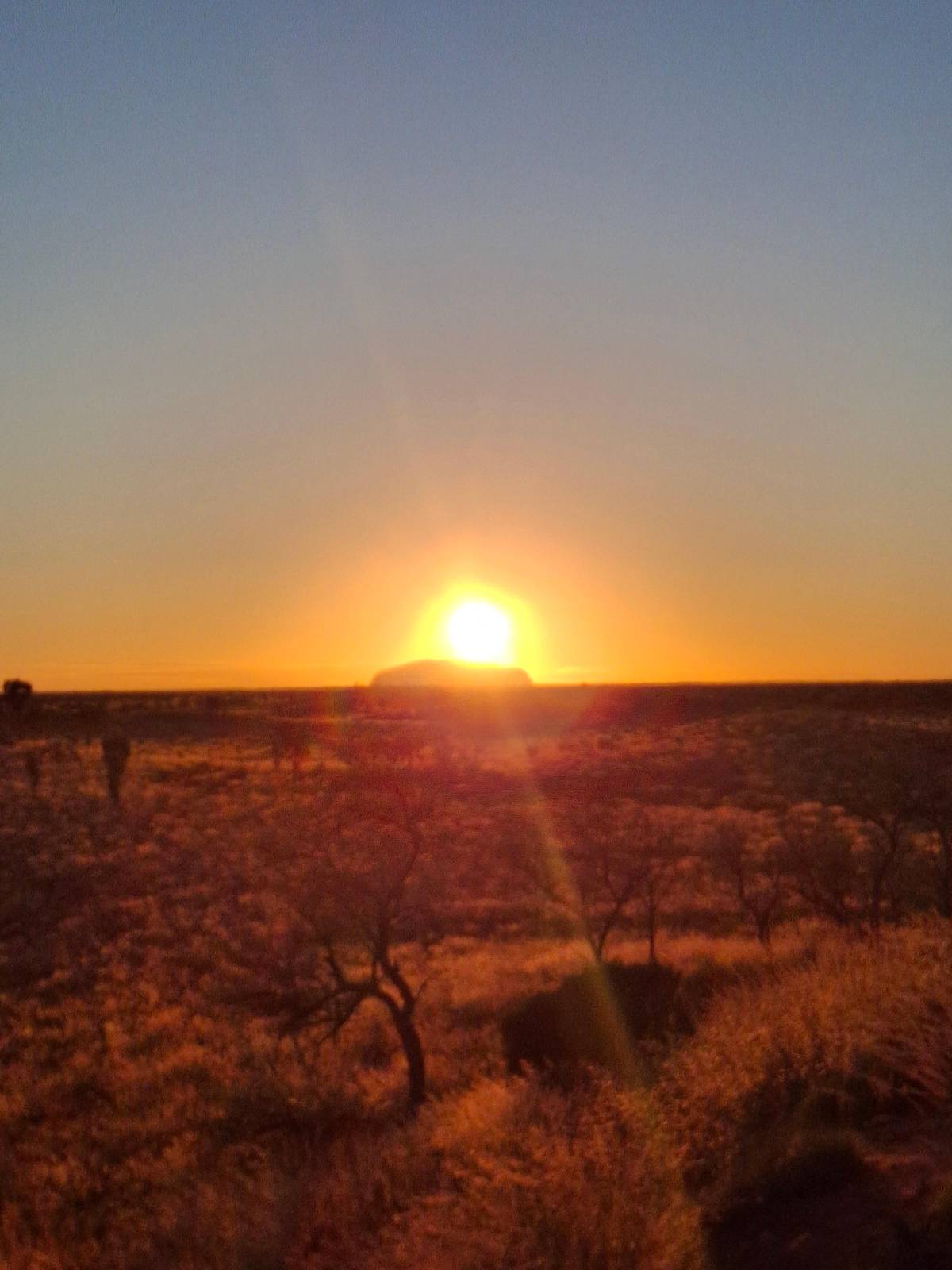
In winter, the late gates and the cold set the pace. With the park opening at 6.30 am in June and July, you leave your hotel later than in summer, but you wait for the light in near-freezing air: the July average low is 4.5 °C.132 Stand on the platform in a down jacket, a beanie and gloves, and keep a hot drink in your hand; the booked tour serves tea or coffee at the viewing area.
In summer, everything moves earlier. The gates open at 5.00 am from October to February, and by mid-morning the heat already rules out long walks.1315 January nights average 23 °C, so a light layer is enough for the dawn, but bring at least one litre of water per hour for any walk that follows.222
In the shoulder months the morning is at its most comfortable: in April the average low is 14.7 °C and in October 15.2 °C, which makes the hour on the dune a pleasure rather than an endurance test.2 These are also good months to combine the sunrise with the Valley of the Winds, as long as you set off early enough to beat the heat closures.19
Choosing your month
If walking is your priority, choose May to September and accept cold dawns.1 If you want the flowers, aim for August or September.3 If you only have the hot months, plan every outdoor hour for early morning and let a sunrise tour carry most of your sightseeing.
Think about the shoulder months too. April averages a high of 30 °C and a low of 14.7 °C, with 14 mm of rain; October averages 32.5 °C and 15.2 °C, with 24 mm.2 Anangu call April and May Wanitjunkupai, the start of the cold weather, when reptiles go into brumation.7
Whatever the month, book with a flexible ticket. On the booked sunrise morning, dropping out costs nothing until 24 hours ahead, so a bad forecast need not cost you your dawn.
Pick your dawn
Uluru at first light, Kata Tjuta by mid-morning
Pickup in Yulara, tea or coffee at sunrise and a walk in Walpa Gorge; cancel free up to a day before.


You ask,we answer.
What is the coolest month?
June and July. Average highs of 20.2 °C and 20.9 °C.2
How cold is a winter sunrise?
Close to freezing. July averages a low of 4.5 °C at the Yulara station.2
What is the temperature at Uluru in summer?
Hot. January averages a high of 38.4 °C.2
When does it rain most?
From November to March. That is when heavy rain is most likely.4
When do the wildflowers bloom?
Usually August and September. How many appear depends on earlier rain.3
What time does the park open in winter?
6.30 am in June and July. And 5.00 am from October to February.13
Are there flies?
In summer, many. A head net helps.20
Sources
What this guide is based on
- 1Parks Australia, Uluru-Kata Tjuta National ParkWhen to come↩
- 2NOAAGlobal Summary of the Month, Station Yulara Aero, by Ayers Rock airport (ASN00015635), 1991 to 2020↩
- 3Parks Australia, Uluru-Kata Tjuta National ParkWhen to come↩
- 4Parks Australia, Uluru-Kata Tjuta National ParkRain on the rock↩
- 5Parks Australia, Uluru-Kata Tjuta National ParkUluru base walk↩
- 6Parks Australia, Uluru-Kata Tjuta National ParkSeasons↩
- 7Parks Australia, Uluru-Kata Tjuta National ParkSeasons↩
- 8Parks Australia, Uluru-Kata Tjuta National ParkSeasons↩
- 9Parks Australia, Uluru-Kata Tjuta National ParkSeasons↩
- 10Parks Australia, Uluru-Kata Tjuta National ParkSeasons↩
- 11Parks Australia, Uluru-Kata Tjuta National ParkAmazing facts↩
- 12Parks Australia, Uluru-Kata Tjuta National ParkWhat to pack↩
- 13Parks Australia, Uluru-Kata Tjuta National ParkOpening hours↩
- 14Parks Australia, Uluru-Kata Tjuta National ParkRain on the rock↩
- 15Parks Australia, Uluru-Kata Tjuta National ParkStaying safe↩
- 16Parks Australia, Uluru-Kata Tjuta National ParkWalpa Gorge walk↩
- 17Parks Australia, Uluru-Kata Tjuta National ParkWhen to come↩
- 18Parks Australia, Uluru-Kata Tjuta National ParkNorth-east walk↩
- 19Parks Australia, Uluru-Kata Tjuta National ParkValley of the Winds walks↩
- 20Parks Australia, Uluru-Kata Tjuta National ParkWhen to come↩
- 21Parks Australia, Uluru-Kata Tjuta National ParkPhotography↩
- 22Parks Australia, Uluru-Kata Tjuta National ParkStaying safe↩
Keep reading